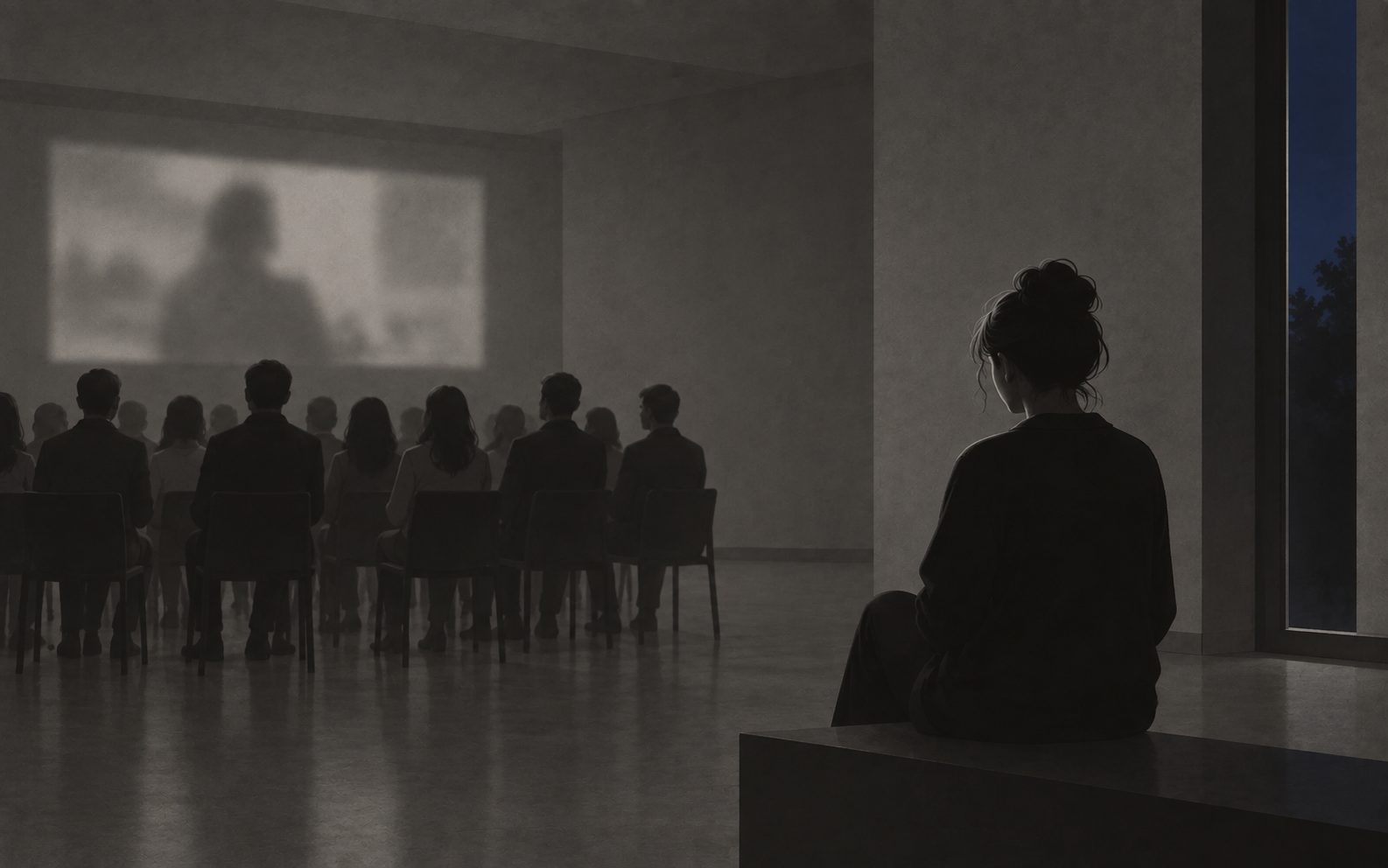
Social media is becoming less social not because people have stopped wanting connection, but because the platforms have reorganised connection around spectatorship.
From participants to audiences
Ofcom’s 2026 research on UK adults describes a clear behavioural change. Only 49% of adult social-media users now actively post, share or comment, down from 61% in 2024. At the same time, fewer people are exploring new websites, and more are deleting apps, setting limits or leaving their phones behind.
The important point is not simply that people post less. It is that the social user is being separated from the social object. A person opens a platform to see what large accounts, creators and institutions have made. Their occasional reaction takes place inside a stream whose main function is distribution, not mutual exchange.
This is how a network starts to resemble television. The screen is interactive, but the structure is increasingly one-to-many. A small number of accounts produce the material; everyone else watches, reacts and moves on. The comment box remains, but it does not make the relationship reciprocal. When Social Media Becomes Television explores this shift.
The 2026 Digital News Report makes the same structure visible in news. Forty-six percent of respondents get some news from creators of any type, while 30% say social and video networks are their main source of news. Most people still combine creators with traditional media, but the place where they encounter information is increasingly a third-party feed.
The creator becomes the meeting place
An influencer or content creator does not need to be a person we know. They become the stable figure around which our online attention is organised. We return to their voice, recognise their formats and share their interpretations with people we actually know. In that sense, many social interactions no longer begin with another person. They begin with a piece of creator content.
That distinction matters. A friend’s message addresses us; a creator’s post gathers us. The first is a relationship between people. The second is a public object around which relationships may briefly form. When most interaction is triggered by the same highly distributed content, our social world becomes dependent on whoever controls the supply of that content.
This does not mean creators are unimportant or that every online interaction is fake. It means that the platform has changed the direction of social energy. Instead of many people making a space together, many people arrive at a space already made for them.
A different kind of social technology
One Reader begins from the opposite direction. It does not ask a person to browse a crowd, follow a large account or react to a public object. It creates a narrow possibility for one person to write to another person, without requiring a creator to mediate the encounter.
The difference is small in interface terms and large in social terms. One model distributes attention from a few visible accounts to a large audience. The other distributes the chance to speak between two people who would otherwise never meet.
The question is not whether social media should become more interactive. It is whether interaction should once again be allowed to start between people, rather than between audiences gathered around content.