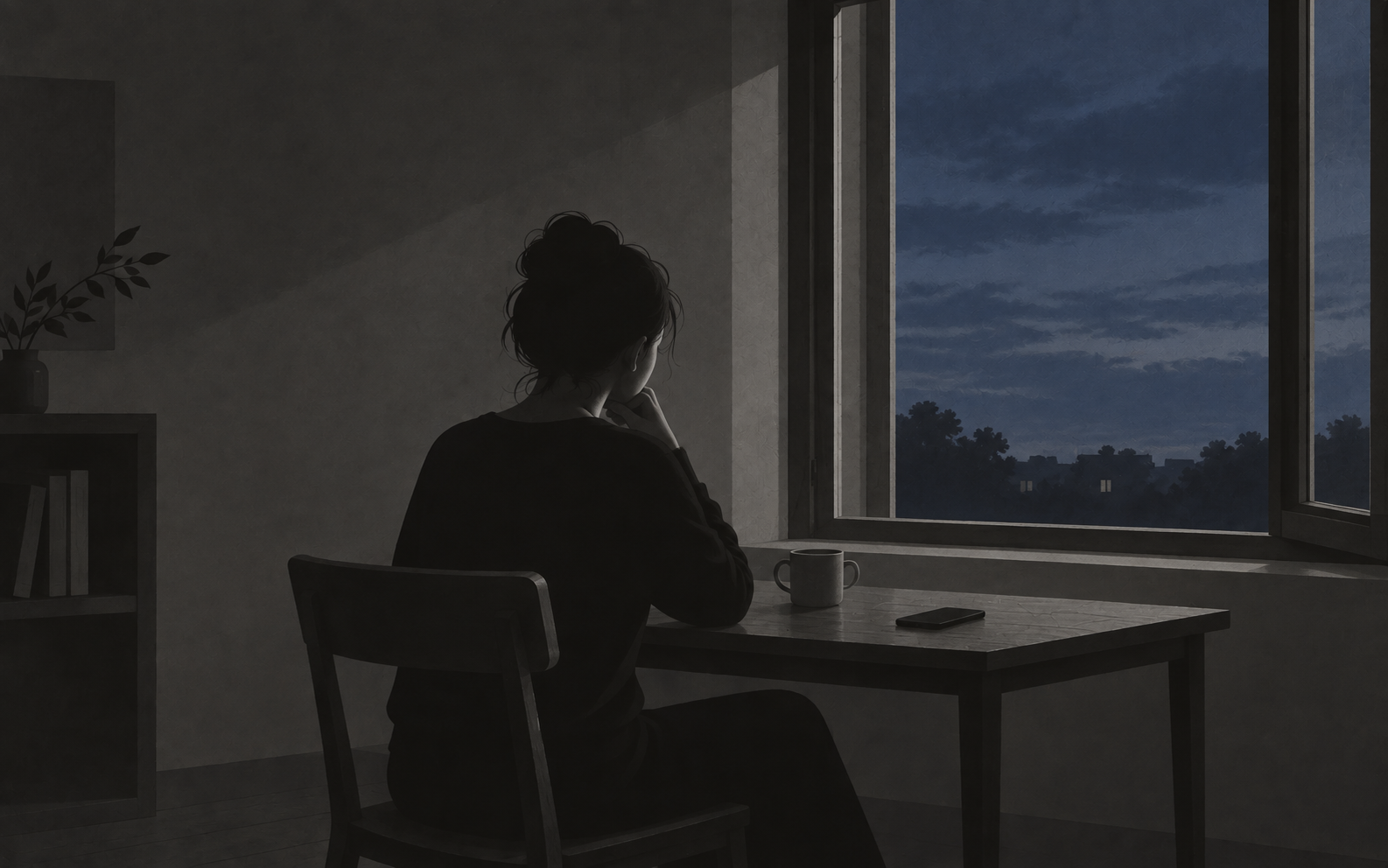
The current backlash against scrolling is not mainly a campaign to use technology less. It is a demand to recover the ability to decide what technology is for.
From reducing screen time to changing the question
The language of digital wellbeing usually begins with subtraction: fewer hours, fewer notifications, fewer apps. But the most interesting part of the backlash is the question underneath it. People are not only asking how to stop looking at a screen. They are asking why the screen keeps deciding what looking should mean.
Ofcom’s 2026 study found that 67% of UK online adults sometimes spend too long on their devices, while 40% say this happens most days. The proportion who believe that the benefits of being online outweigh the risks fell from 72% to 59% in one year. These figures do not prove that every platform harms every user, but they show a widening gap between being connected and feeling in control.
The Atlantic’s August 2026 conversation on the “scrolling backlash” describes the cultural side of the same movement: people renegotiating their relationship with their phones, trying to rebuild their attention and feeling uneasy about the time that disappears inside a feed. The important shift is from “I should have more discipline” to “this environment is designed to make my attention available.”
The feed has no natural ending
A feed is not simply a list of things to read. It is an environment without a clear stopping point. Each item is followed by another, and the decision to continue is made easier than the decision to leave. The user is technically free, but the shape of the space makes continuation feel like the default.
That is why deleting an app can feel disproportionately difficult. The person is not only giving up content. They are giving up a routine, a source of ambient company and a way to avoid the silence between one activity and the next. The Medium of Attention describes this wider problem: attention is not an unlimited personal resource but something organised by the tools around us.
The answer cannot be a universal rule about phones. A map, a message from a friend and an endless recommendation feed are all screens, but they make different claims on the person using them. The meaningful distinction is not online versus offline. It is whether the tool has a bounded purpose or whether it continually invents new reasons to remain.
A tool that knows when to stop
One Reader is intentionally limited. A letter has a sender, a recipient and a reason to exist. It can create a connection, but it does not turn that connection into an endless stream. The absence of a feed is not a nostalgic gesture; it is a boundary around the activity.
This is what slow technology can mean in practice. It is not technology that makes every task slower. It is technology that refuses to confuse duration with value. A message should take the time it needs, then allow the person to leave.
The best response to the scrolling backlash may therefore be neither total disconnection nor better self-control. It may be a larger variety of tools, each with a clearer idea of what it is asking us to do — and what it will allow us to stop doing.